
Our sales can help you find the best wayfinding solution for you or your customer.


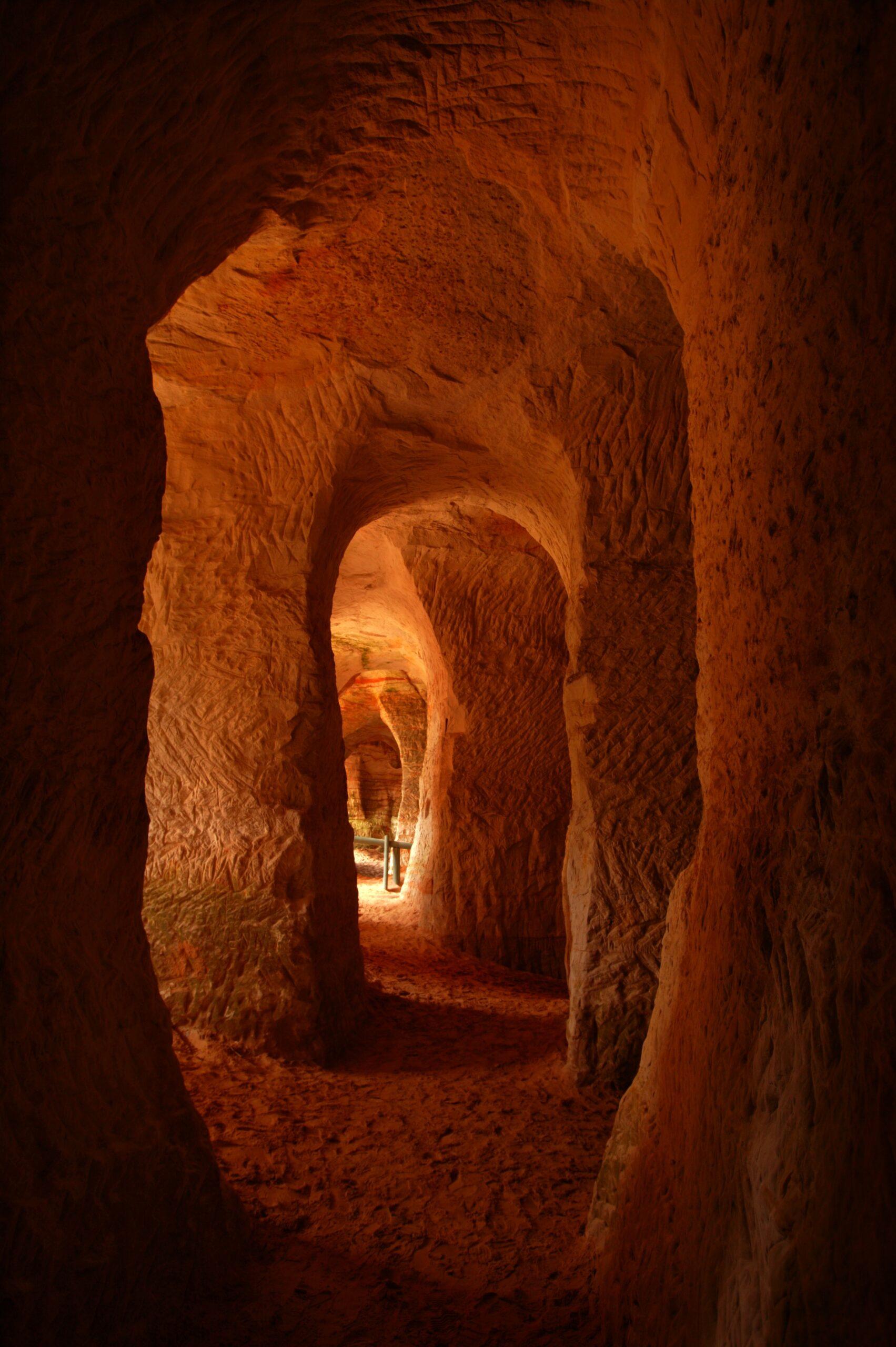

The Piusa caves are among Estonia’s most mysterious and unique natural landmarks. Formed during glass sand mining between 1922 and 1966, this underground world features towering sandstone pillars, vaulted ceilings, and nearly 20 kilometres of tunnels. Today, the caves serve as the Baltic region’s largest bat hibernation site. Authorities protect the area strictly for nature conservation.
The caves once welcomed visitors, but authorities closed them in 2006 because of a collapse risk. Yet interest in Piusa has only grown. The Piusa Visitor Centre now ranks among the most popular attractions in South-Eastern Estonia. This raises an important question: how can visitors experience a site they cannot enter?
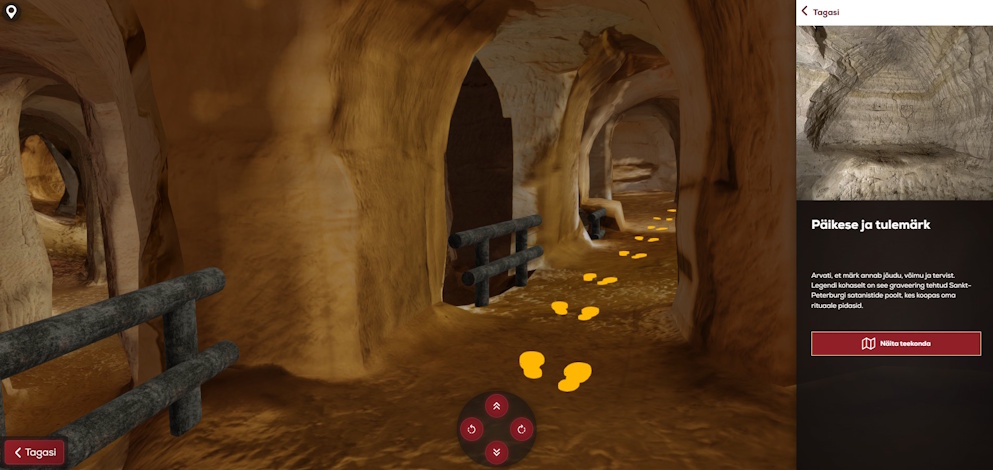
The answer lies in modern 3D technology. The Piusa Visitor Centre, Võrumaa Development Centre, Võru Municipality, Maperions, and the Estonia–Latvia Interreg programme joined forces and launched an ambitious project. The partners aimed to create a highly realistic 3D model of the Piusa cave system. The model lets visitors explore the caves virtually.
The 3D Wayfinder team led the work and used its experience in complex spatial environments. This time, however, the goal was even more ambitious: to capture the caves in their entirety, with maximum realism.
To achieve this, we chose photogrammetry—a method that creates accurate 3D models from lots of photographs while preserving natural colours and fine details. Working underground presented significant challenges: darkness, humidity, low temperatures, and the need for perfectly consistent lighting.
We divided the cave into smaller sections. We photographed one area at a time with nearly 20 construction lights and a 360° camera. Also captured around 1,200 images during 52 hours underground. Planned each step carefully to ensure precision.
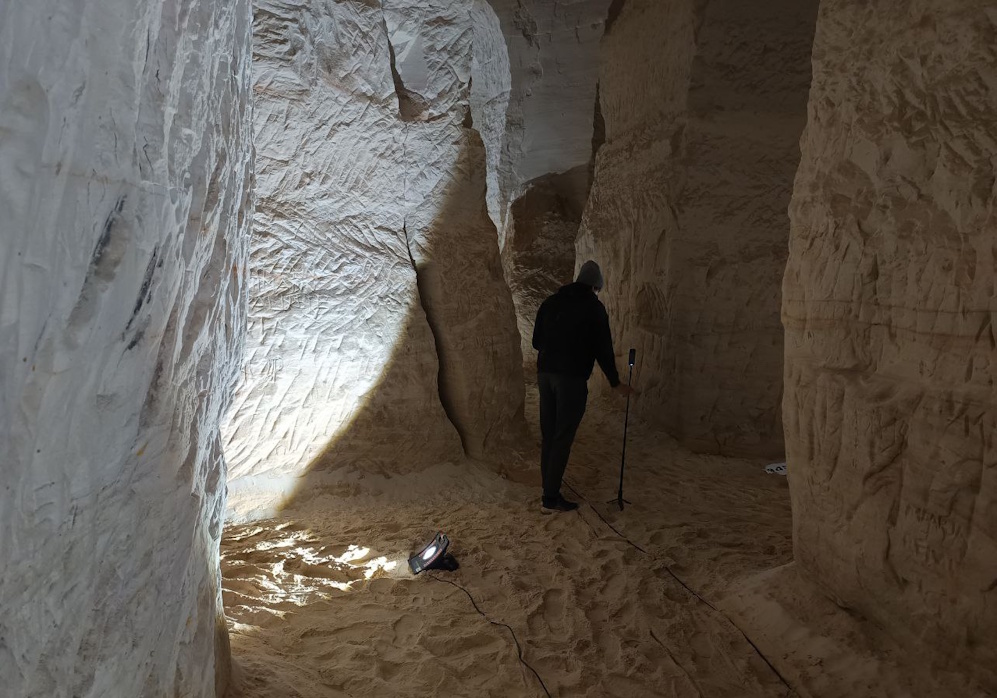
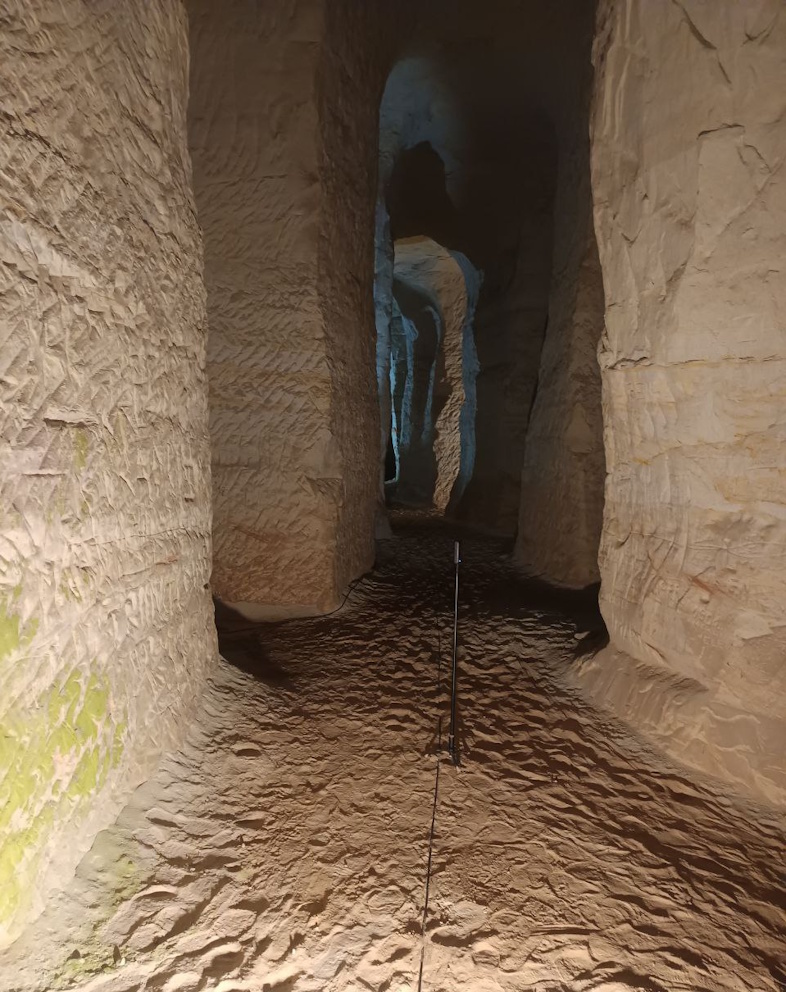
The captured data was processed into 16 separate 3D sections, which were cleaned, refined, and combined into a single model. A key challenge was reducing file size while maintaining visual quality. Through advanced optimisation techniques and texture baking, the final model was reduced by nearly 90%—without sacrificing detail.
The completed Piusa Caves 3D model was deployed on the 3D Wayfinder platform, complete with interactive pathways, a user-friendly interface, and even animated bats. The result is a safe, immersive experience that allows visitors to explore a cave system that remains closed in the physical world.
The Piusa cave 3D model is a powerful example of how digital technology can preserve and present natural heritage—opening closed spaces in a completely new and engaging way.
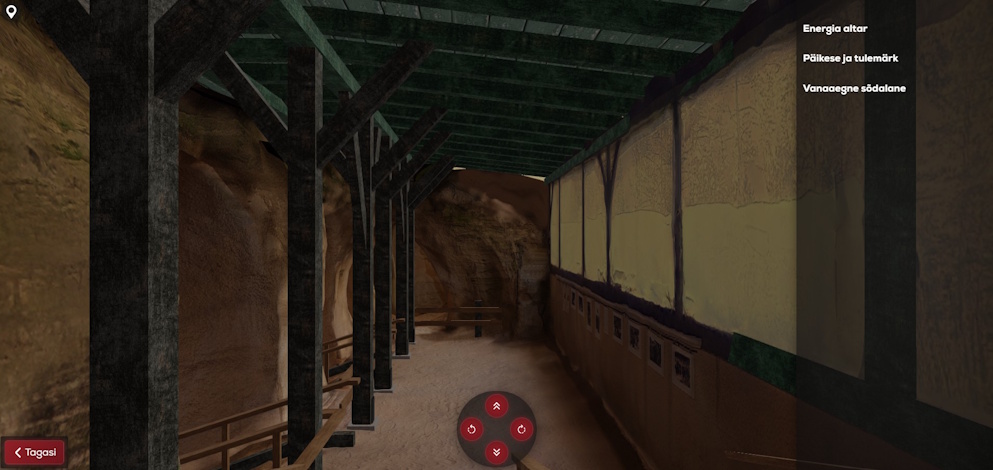
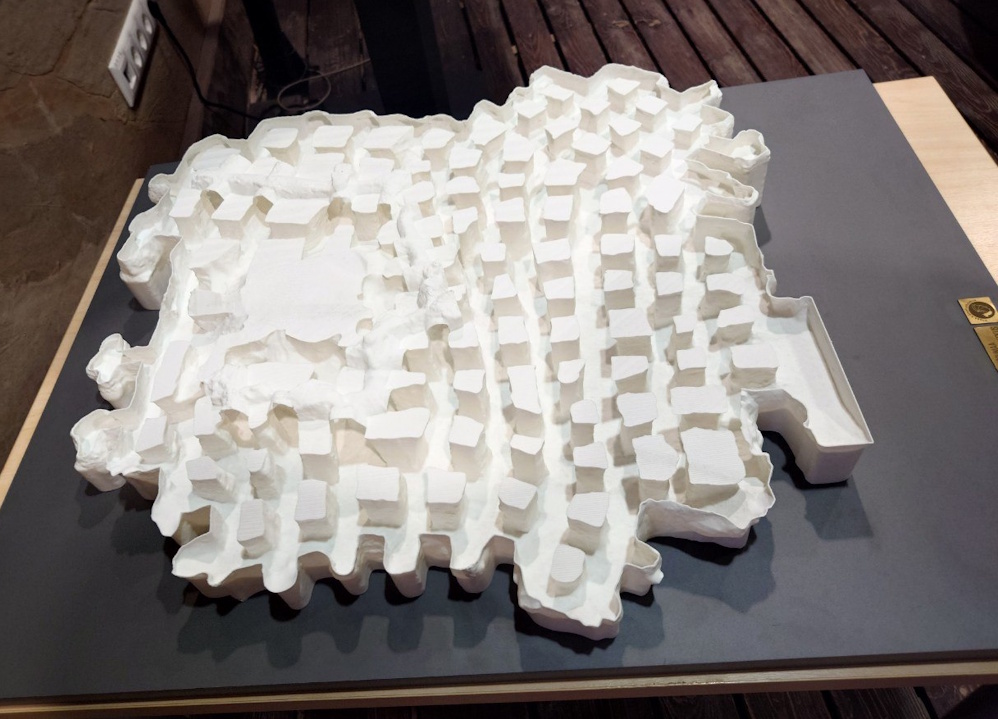
In addition to the Piusa Caves virtual 3D model, we also created a physical 3D scale model of the cave system, which is now on display at the Piusa Visitor Centre. Visitors can explore the layout and structure of the caves up close, see how the tunnels and chambers connect, and get a clear sense of the cave network’s scale—right there at the centre.
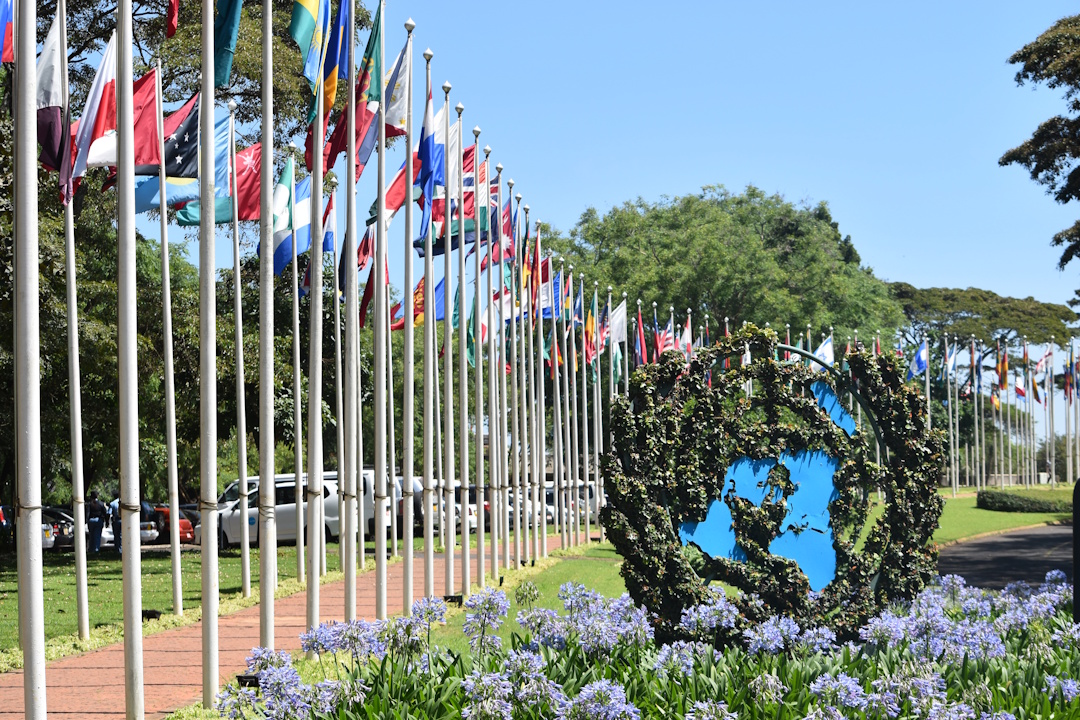
The United Nations Office at Nairobi (UNON) is one of four major UN office sites and hosts a joint presence of many UN agencies. The UN designated it as its African headquarters in 1996. United Nations Office at Nairobi also hosts the global headquarters of the United Nations Environment Programme (UNEP) and the United Nations Human Settlements Programme (UN-Habitat).
The complex includes a “green” building that is fully energy- and carbon-neutral and houses UNEP and UN-Habitat. It stands as Africa’s first of its kind, recycling water and using natural light to cut reliance on artificial lighting. The design leverages natural airflow instead of air conditioning, and solar panels generate all the energy the building consumes. UN Secretary-General Ban Ki-moon and Kenyan President Mwai Kibaki opened the building in 2011.
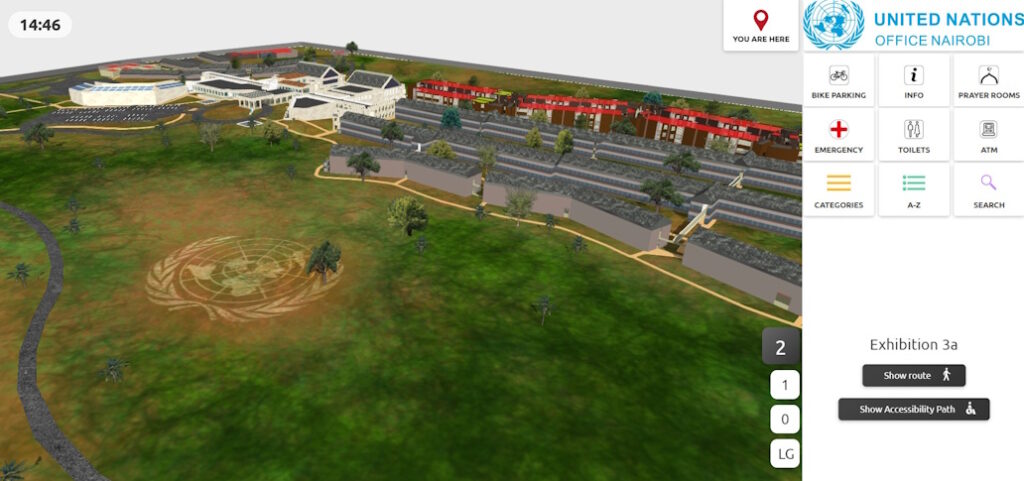
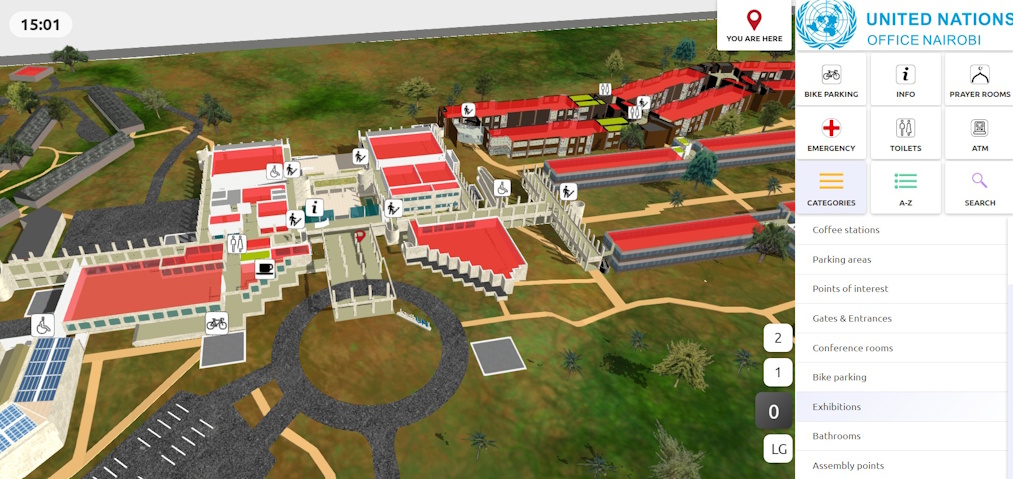
The 3D Wayfinder map covers the entire UN Nairobi headquarters and works only on the local network. We designed the map to be clear and minimalistic so visitors can orient themselves in a few clicks. The view opens as a 3D campus model. The map makes buildings easy to distinguish, keeps names highly legible, and preserves correct proportions even at high zoom. The menu offers quick search and clear categories, so users can find UNEP or UN-Habitat in an instant.
When a user selects a destination, the system draws a clear route and guides them between floors and buildings. Use the floor selector to change levels, while icons mark stairs, elevators, and entrances. The map highlights wheelchair-accessible paths so wheelchair users can plan a comfortable route. We keep labels short and use uniform, high-contrast icons to maintain readability on large screens. Detailed 3D modeling shows building volumes and landmarks, while the simple interface keeps the experience fast and smooth. Overall, the map combines clean design, accurate spatial imagery, and clear directions to help people navigate this very large complex with confidence.
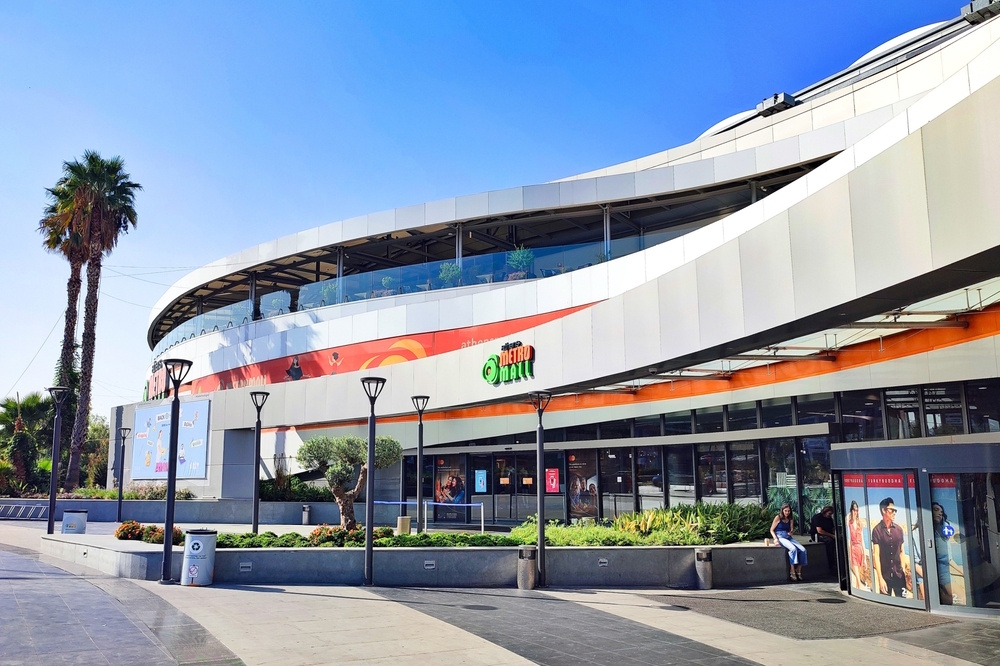
The Metro Mall in Athens, Greece, is a beautiful shopping center. Where you can find pleasure and entertainment for the whole family, young and old! there you will find your favorite brands in a specially designed space that will turn your walk into an experience! The shopping center has 5 floors, 95 stores, 18 coffees and restaurants and five cinemas.
The shopping center wanted visitors to use the map on every device – kiosks, website and phones. We proposed a budget-friendly approach: a popular, proven template. We styled a simple, intuitive 2D map to match the client’s colors and logos. Visitors scan a QR code to open the map on their phones. The phone UI matches the kiosk and web versions. The result delivers a simple, clean, and very easy indoor navigation experience that aligns with the client’s homepage map.
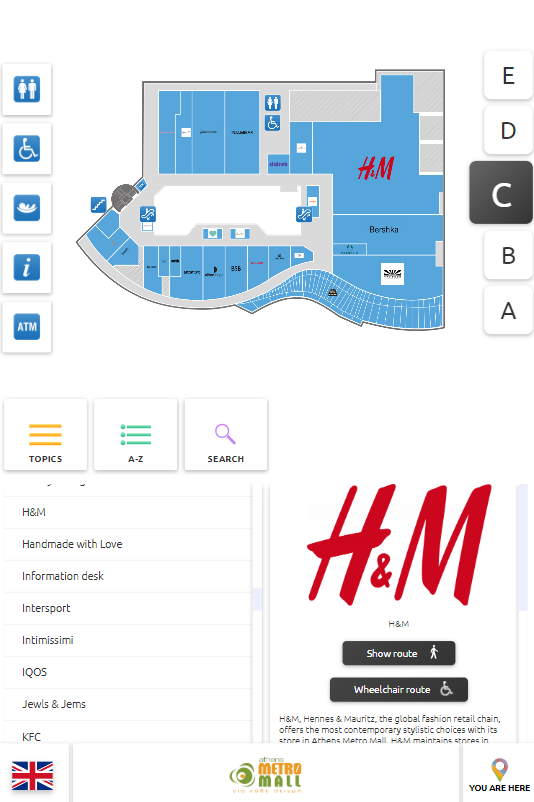
This project is different as 3D Wayfinder used this opportunity to test new solutions as a pilot project. One of the updates what 3D Wayfinder applied was offline software in case the internet connection is down. In the past it was stand-alone solution that you needed to update when the map changes but now it can be done online.
Metro Mall got a high-quality solution in the form of an indoor navigation solution that customers are happy to use. 3DWayfinder also offers an advertising module that department stores can use to generate revenue. You can read more about it here.
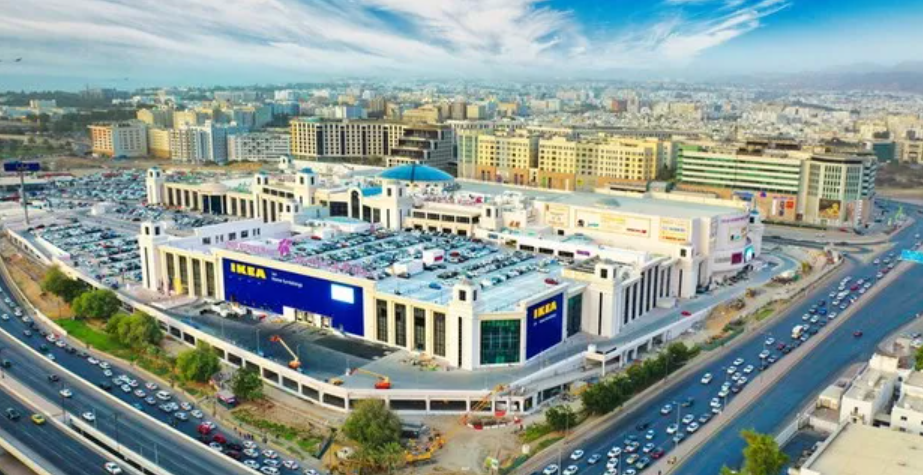
Oman Avenues Mall is one of the largest shopping malls in Oman. Beyond its sheer scale and architectural finesse, Oman Avenues Mall functions as a cultural crossroads, where locals, expats, and tourists converge in a shared rhythm of commerce and connection. Avenues Mall features an impressive selection of prestigious retail brands, fine dining options and entertainment experiences for the discerning visitor.
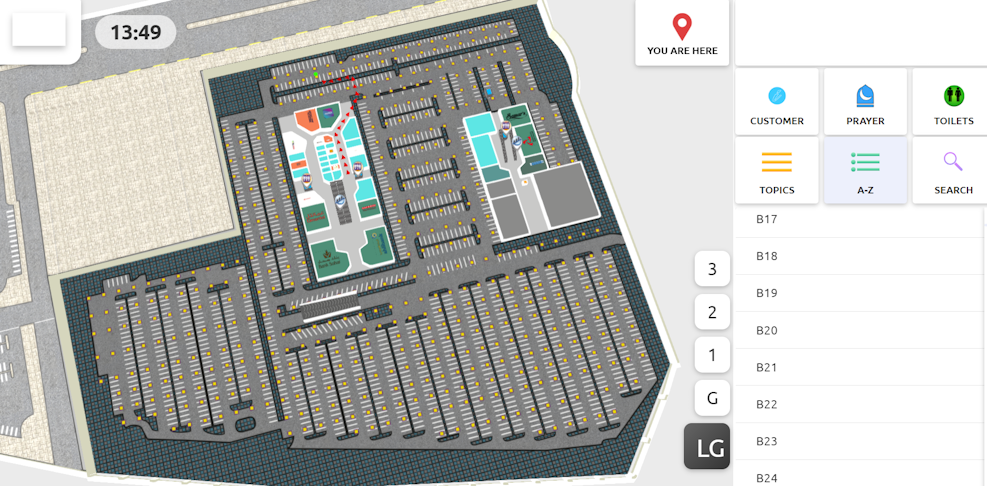
The mall wanted a standout kiosk solution and navigation that starts in the parking lot. We understood the challenge and accepted it. We delivered a medium-detailed 3D map and a lifetime software license.
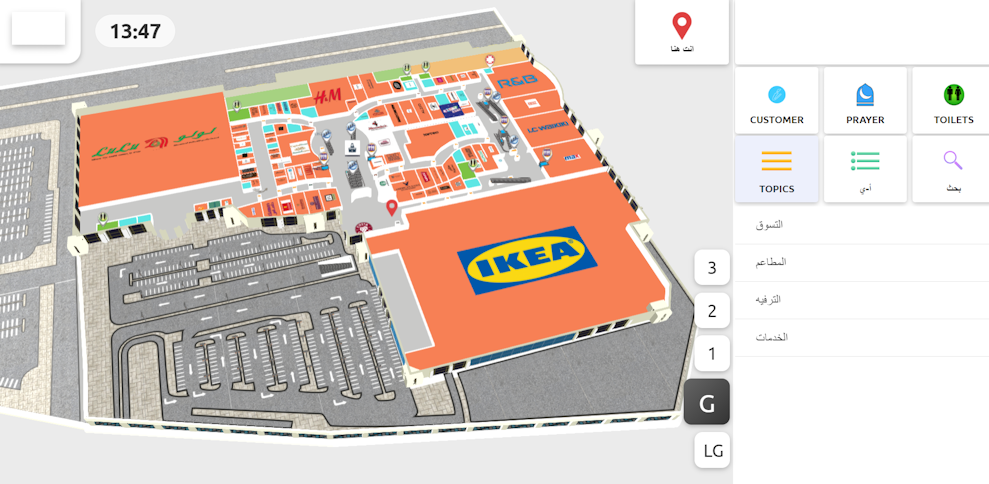
We built a QR map with a custom smartphone page and placed QR codes in each parking area. Visitors scan a code to open the map at their parking spot, choose a destination and later go back to the car. We provided a lifetime software license and host the solution on an EU cloud to meet strict data-protection standards. The simple rollout caused no issues, and we finished quickly.
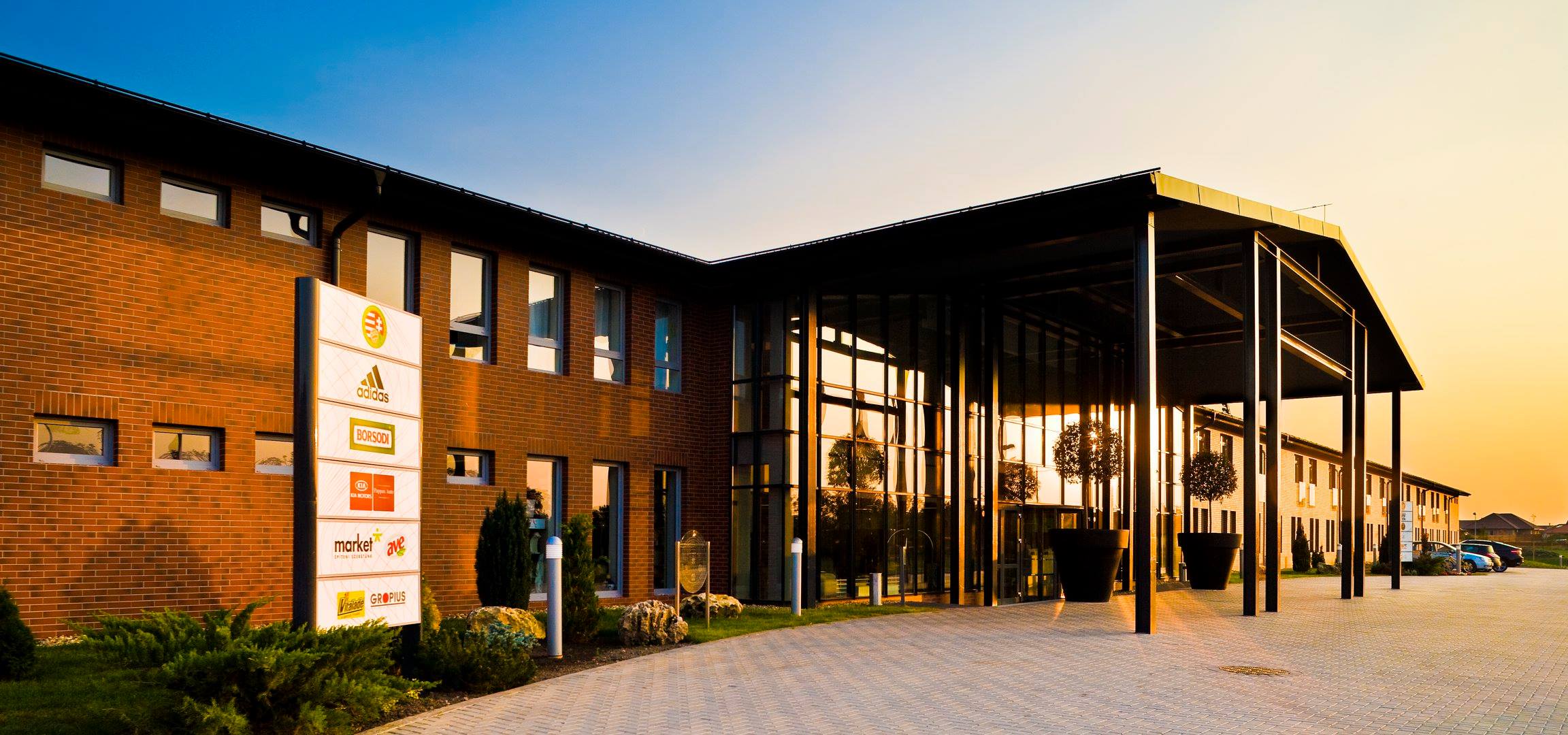
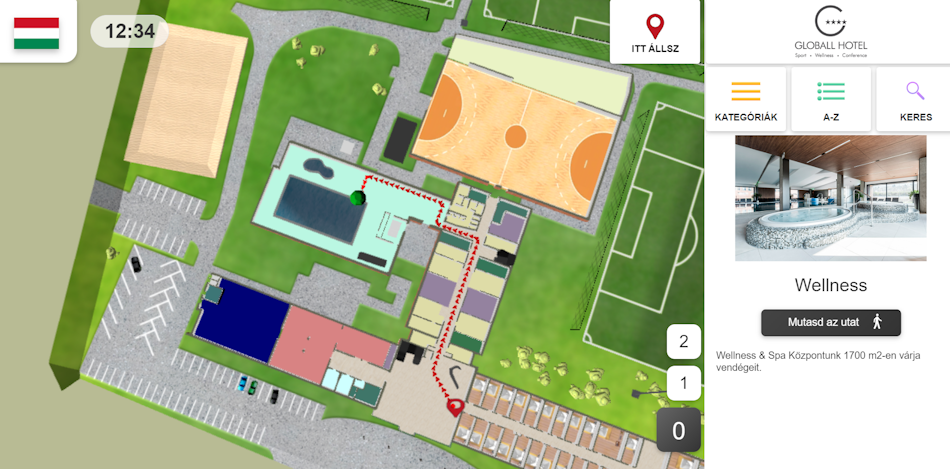
Globall Hotel is a four-star hotel in Hungary, offering top-class services in the areas of health, events and sports. The hotel has 81 Superior rooms and 4 Junior suites. In addition, the hotel has 5 UEFA-standard football fields and many other sports facilities. An interesting fact is that the Hungarian national football team prepares for its matches there.
Hotel areas are often large and hotel guests need a map to navigate. 3D Wayfinder solutions are ideal for hotel navigation. We offer offline wayfinding, QR code-based solutions and many other options to make the hotel visit as pleasant as possible. The hotel turned to 3D Wayfinder for high-quality indoor navigation software. We applied for the project, and the client selected us over several major indoor navigation vendors because we consistently deliver high quality.
Our Hungarian partner helped us a lot and provided a high level of service to the client. Users can open the map at a kiosk or by scanning a QR-code on their phones. This project was special because our Hungarian partner handled both the modeling and the data entry. The final product shows that our partners can create models, enter data, and build routes while 3D Wayfinder provides support from the side.
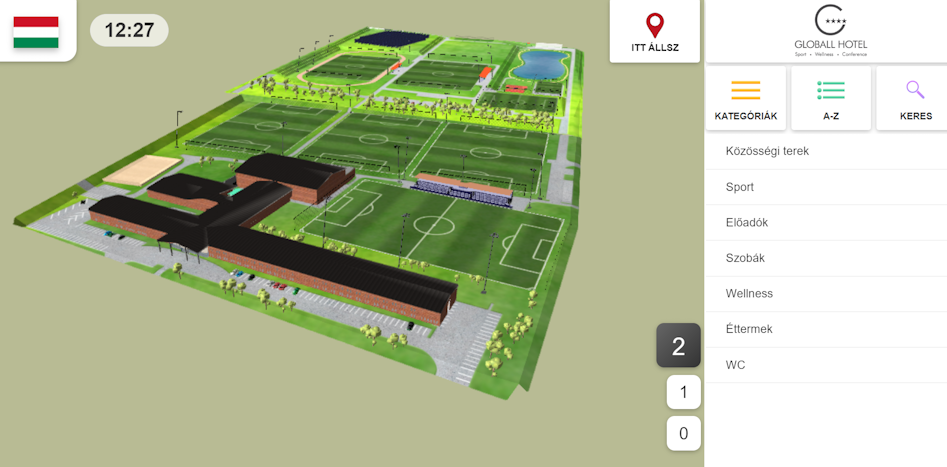
Our Hungarian team used SketchUp for 3D modeling, which surprised us because most teams model buildings with Blender or other high-end 3D tools. The outcome looks excellent, and we commend our partner for the strong work.
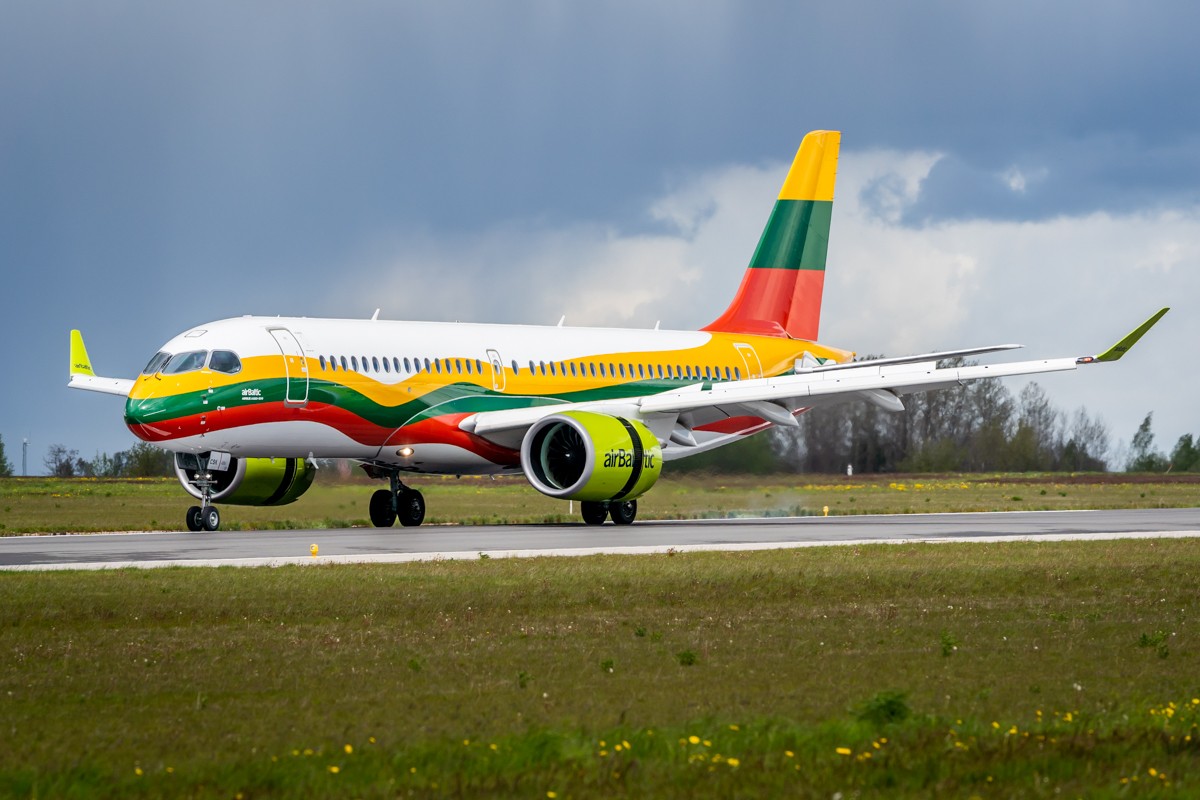
Vilnius Airport is the largest commercial airport in Lithuania. In 2020, Vilnius Airport welcomed 1.3 million passengers and in 2024 this number was 4.8 million passengers. The Airport occupies an area of 326 ha, and the length of the airfield perimeter is 10.54 km. The airport is located on a plateau in the south of Vilnius. It is only 7 km or 15 minutes drive by car from the centre of the capital. The airport provides aviation and non-aviation services to national and foreign economic entities, as well as natural persons. 2024 Vilnius Airport built new beautiful terminal.
Vilnius Airport faces a familiar yet sensitive challenge for travelers: getting to the right flight on time while gates, check-in lines and security corridors change dynamically, and passengers must be routed to either Schengen or non-Schengen areas. 3D Wayfinder solves this with an integrated experience that combines an interactive 3D map, indoor navigation, and real-time flight information on both kiosk terminals and a QR-code map for smartphones.
All information, what normally displayed on screens, such as flight numbers, destinations, departure times, check-in desks and gates, are also visible in the 3D Wayfinder system. Any changes to flight data are automatically transferred to the 3D Wayfinder interface, so passengers can see not only when and from which gate their flight will depart, but also a dynamically calculated route that reflects the current situation.
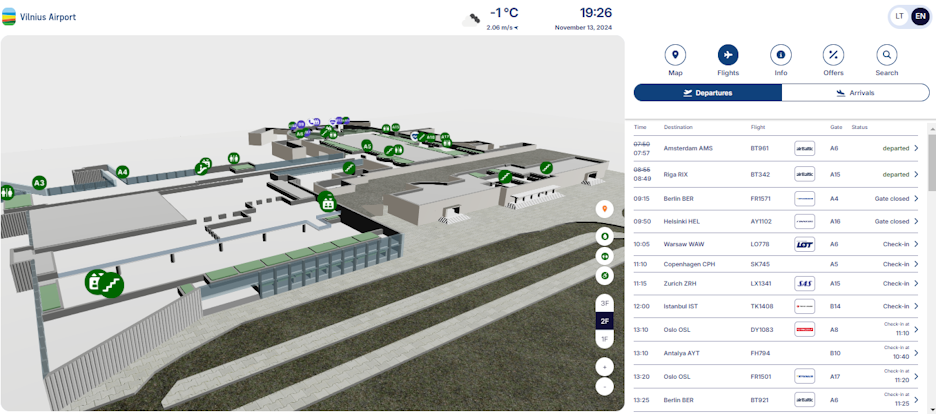
The 3D map acts as a real-time navigation graph. Check-in desks and gates are linked to routes that display step-by-step instructions before and after security. When the gate changes, the system immediately changes the route. When check-in opens, the user immediately sees where to go. Importantly, the navigation distinguishes between Schengen and non-Schengen flows.
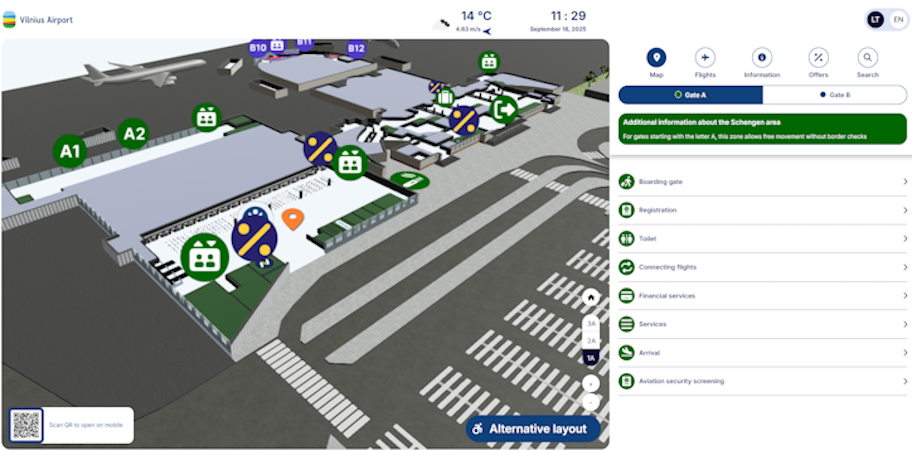
In addition to route finding, the map links to service points and adds branded pins and location-based offers. As travelers follow their route, they can discover nearby shops or cafes and their offers, which will be displayed on the map both on their phone and at kiosks.
Vilnius Airport has received a high-quality and suitable solution. The combination of a 3D map, real-time flight data and real-time changing routes increases the confidence of airport visitors in arriving at the gate on time. Also, a clear division of Schengen and non-Schengen junctions reduces wrong turns among airport visitors. The airport benefits from operational clarity and the confidence that passengers will get to the plane on time. It also benefits from a new advertising channel and passengers get a more relaxed and understandable experience visiting the airport.
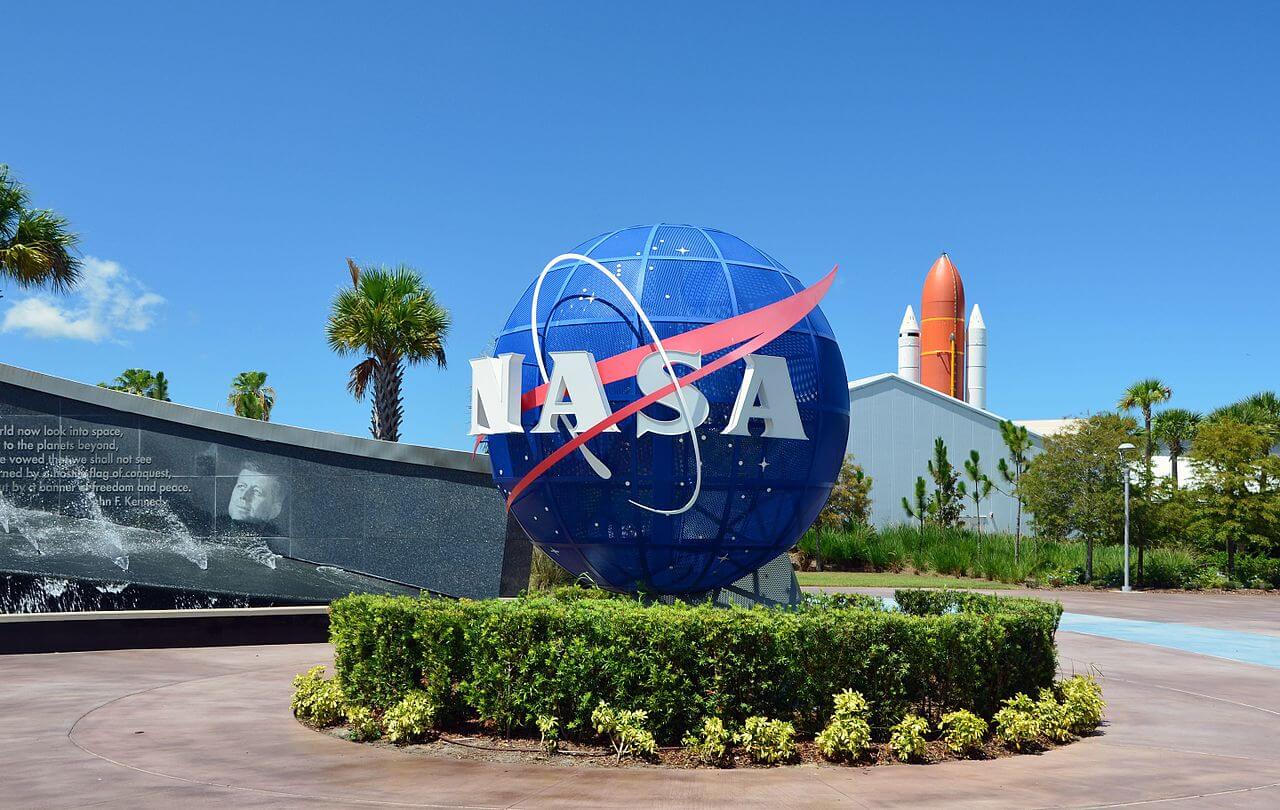
The John F. Kennedy Space Center, located in Florida, is a place of innovation and bravery. This is where the Apollo programm launched it’s space shuttles, which eventually took the first human to the Moon. The Kennedy Space Center Visitor Complex was created to commemorate the achievements of all the people involved. The complex has a variety of exhibits, artifacts, displays and attractions on the history and future spaceflight. In addition, it is possible to witness an actual shuttle launch, as the space center is still active. 3D Wayfinder created a theme park wayfinding solution to ensure a smooth experience for the park’s visitors.
The Kennedy Space Center is a dynamic place of innovation. Therefore it is only right that the visitor complex employs forward-looking theme park wayfinding solutions. During heavy traffic volumes of visitors staff might not be able to give enough attention to every guest. At any entertainment/education venue customer satisfaction should be of upmost importance. In this particular case we opted for the on-site kiosks. Having these kiosks makes life easier for both the visitors and employees. Kiosks ensure that visitors can easily find and get directions to attractions, toilets and eateries. The detailed 3D models, coupled with our pathfinding module, directs guests to the desired location in the fastest possible way. The visitor complex also hosts many special events, such as appearances from astronauts, lectures and rocket launches. Our kiosks display up to date information and notices on these kinds of special events.
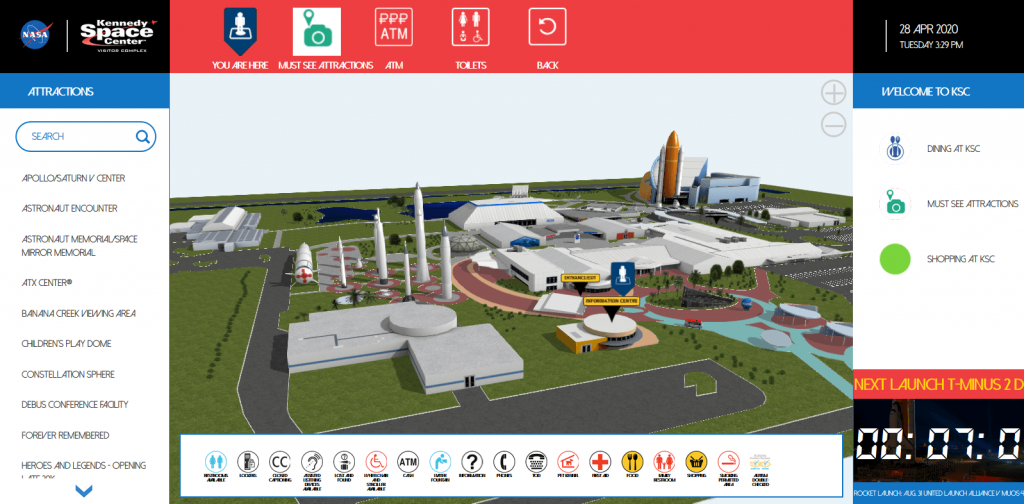
Another good way to guide people at entertainment venues is through a mobile application. A mobile app is accessible at all times by the visitors and gives them their exact location. It is possible to use either Bluetooth beacons indoors or GPS outdoors. The mobile app is extremely useful in case of emergencies, sending notifications about upcoming events at the venue or for targeted advertisements.
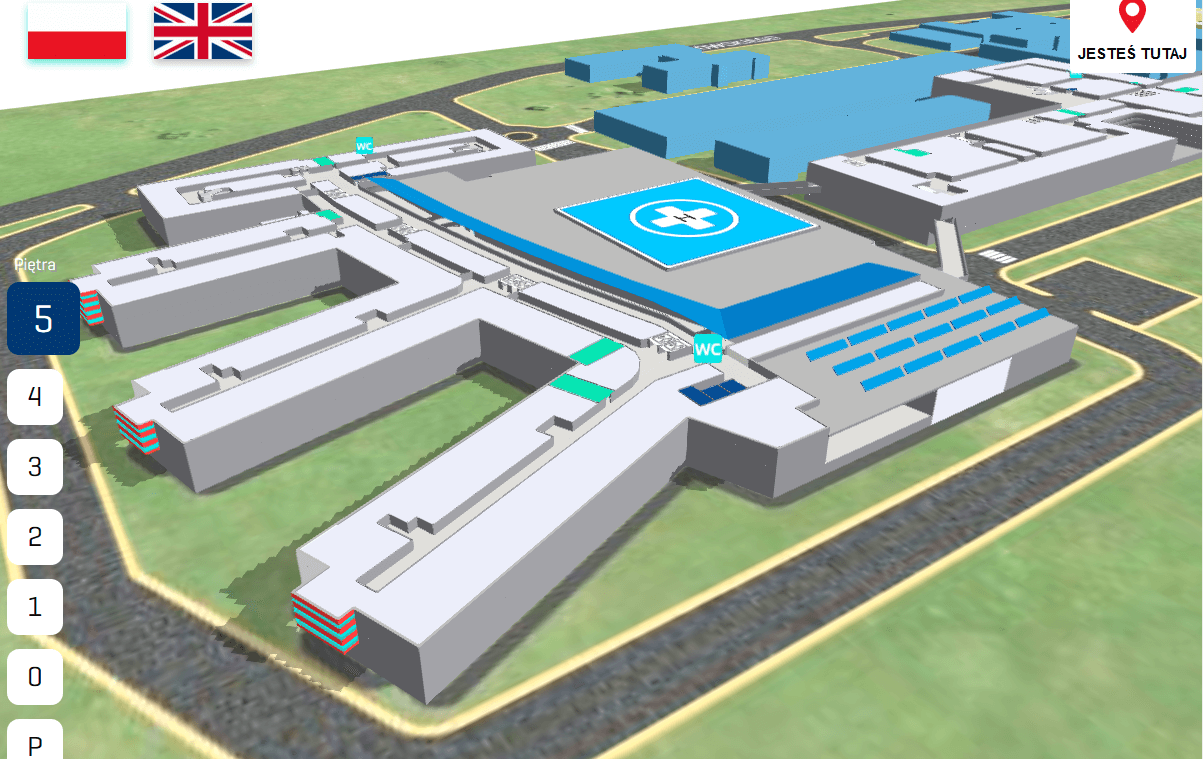
The University Clinical Centre in Gdańsk is the main teaching hospital at the Medical University of Gdańsk. It is a multi-speciality hospital and one of the largest in Poland. The buildings were finished in 2011 and is one of the most modern medical facilities in Europe. The hospital caters to the healthcare needs of 3.5 million people in the region. Also, they conduct tens of thousands of surgeries and millions of laboratory tests every year. Therefore, running a tight ship is very important. A modern and innovative facility like this needs an innovative way to guide all of the patients and visitors they receive. So they turned to 3D Wayfinder!
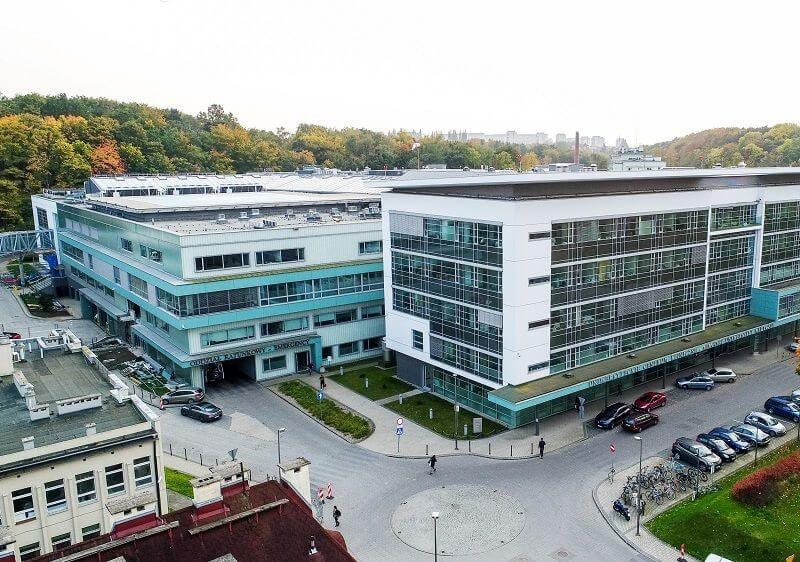
In order to guide visitors, patients and staff alike we created a 3D models of the 17 buildings in the complex. Five of those buildings are more often used by the general public. Consequently we created more detailed models of these five buildings, showing hallways, elevators and individual rooms and offices. The hospital chose to model the most popular offices and locations, such as the admission points, toilets, shops and specific offices or laboratories.
We created this project mainly to help guide non-staff – the patients and their visitors. The hospital installed on-site kiosks in the busiest locations so people can check where they need to go. These kiosks have more potential than just it’s wayfinding capabilities. Self-service kiosks could be used to make appointments, pay for them, to print prescriptions etc… All of this would save precious time and resources for hospitals.
Another good way to guide people is with an online version of this, that wasn’t utilized in this case. Having an intuitive 3D model on your website allows people to pre-plan their movements. This saves time for visitors and staff, as they don’t have to waste time giving directions. Also, an online version opens up numerous possibilities to further integrate the hospital’s functionalities. The same goes for mobile applications. Through Bluetooth beacons, indoor positioning gives people the most accurate and convenient directions straight to their phone. In addition, we can use a mobile application to send people reminders about upcoming appointments, test results or other urgent notifications. These kinds of solutions would enable a fully integrated venue management system.
Healthcare systems around the world are under increasing pressure. It is in everyone’s interest that we find new ways to structure healthcare institutions, including the customer service aspect. Increasing efficiency through self-service and automation is the future. At the time of writing this, the globe is in the middle of a pandemic, which won’t be the last one. When used correctly, these kinds of digital signage and wayfinding solutions are a good way to combat the spread of viruses.
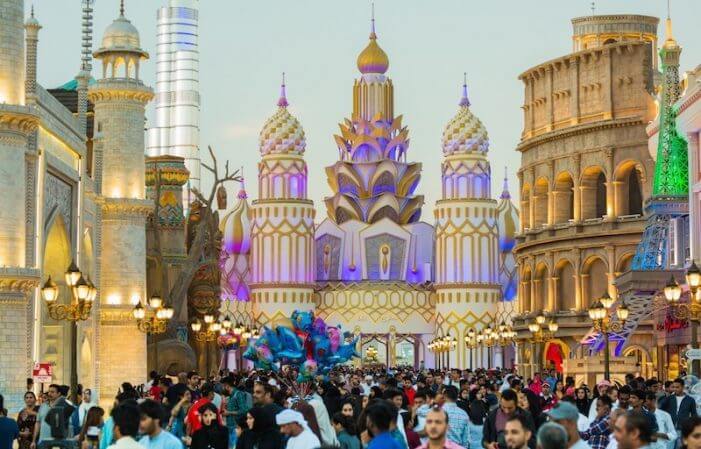
Global Village is one of the largest tourism, leisure, shopping and entertainment projects in the world. It stretches over an area of more than 1, 600 000 sqm and includes over 200 outlets. The mission of of the theme park is to showcase the diversity of mankind through cuisine, entertainment, music and architecture. In 2018 Global Village had more than 7 million visitors! 3D Wayfinder stepped in to help manage the flow of these masses of people with a truly special amusement park wayfinding solution.
In order to meet Global Village’s unique needs we needed to create an unique solution. We decided to integrate our 3D Wayfinding solutions with an already popular app – Whatsapp. Whatsapp is the most popular messanger app globally, which means that a lot of the visitor wouldn’t have to download anything new. The guest simply needs to message a given number and a chatbot will react. The visitor will tell the chatbot where they need to get and the chatbot will send them an URL. Opening the URL will take the guest to a 2D map, where they are shown a path to their desired destination. Since Global Village is largely an outdoor venue we use GPS to pinpoint the device’s location. The visitor will also see additional information about the selected location, e.g opening times, upcoming events or the menu.
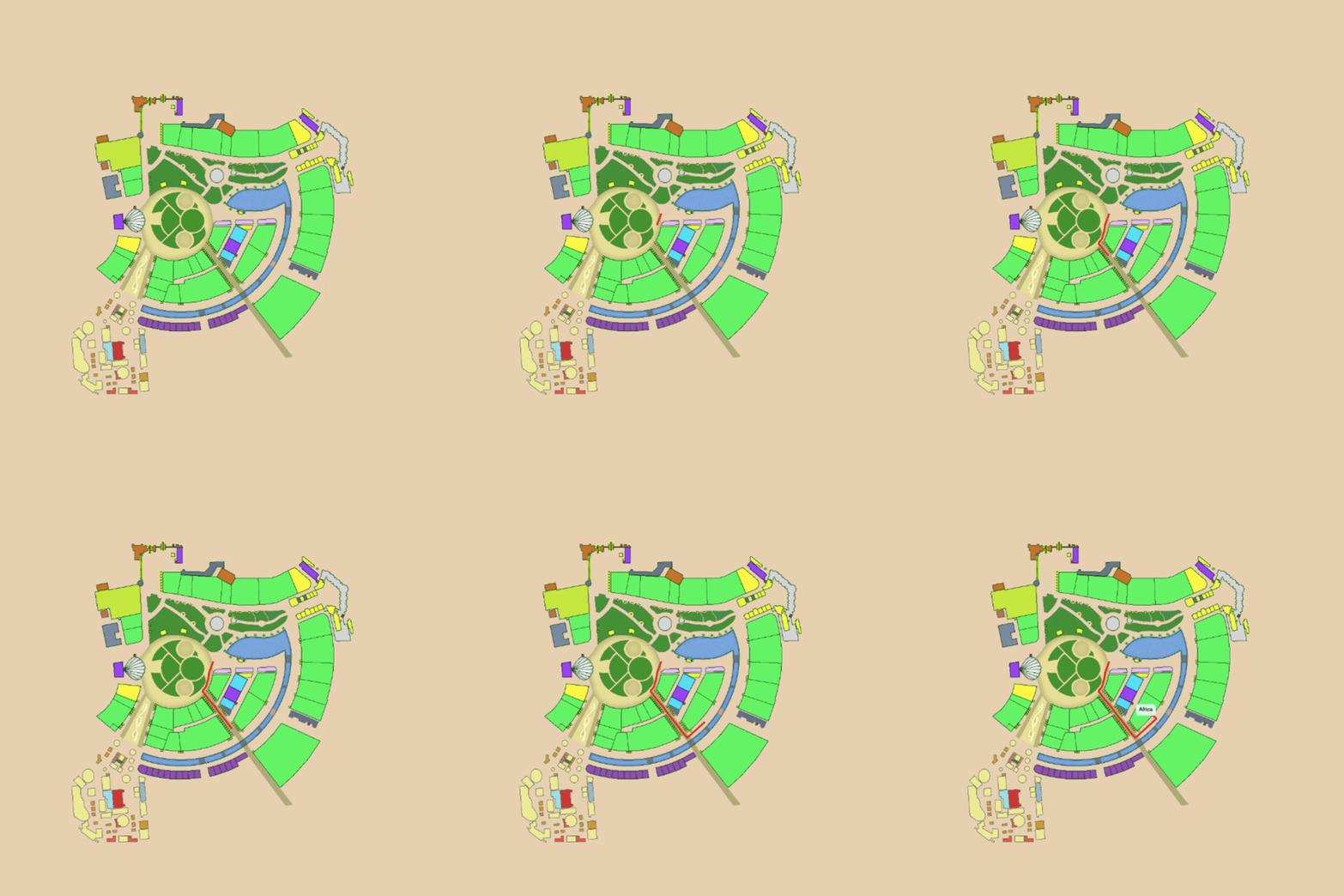
Our amusement park wayfinding solution reduces the workload of workers and enables them to focus on more important tasks. Installing wayfinding kiosks on-site or having interactive map on your website can have a similar effect.
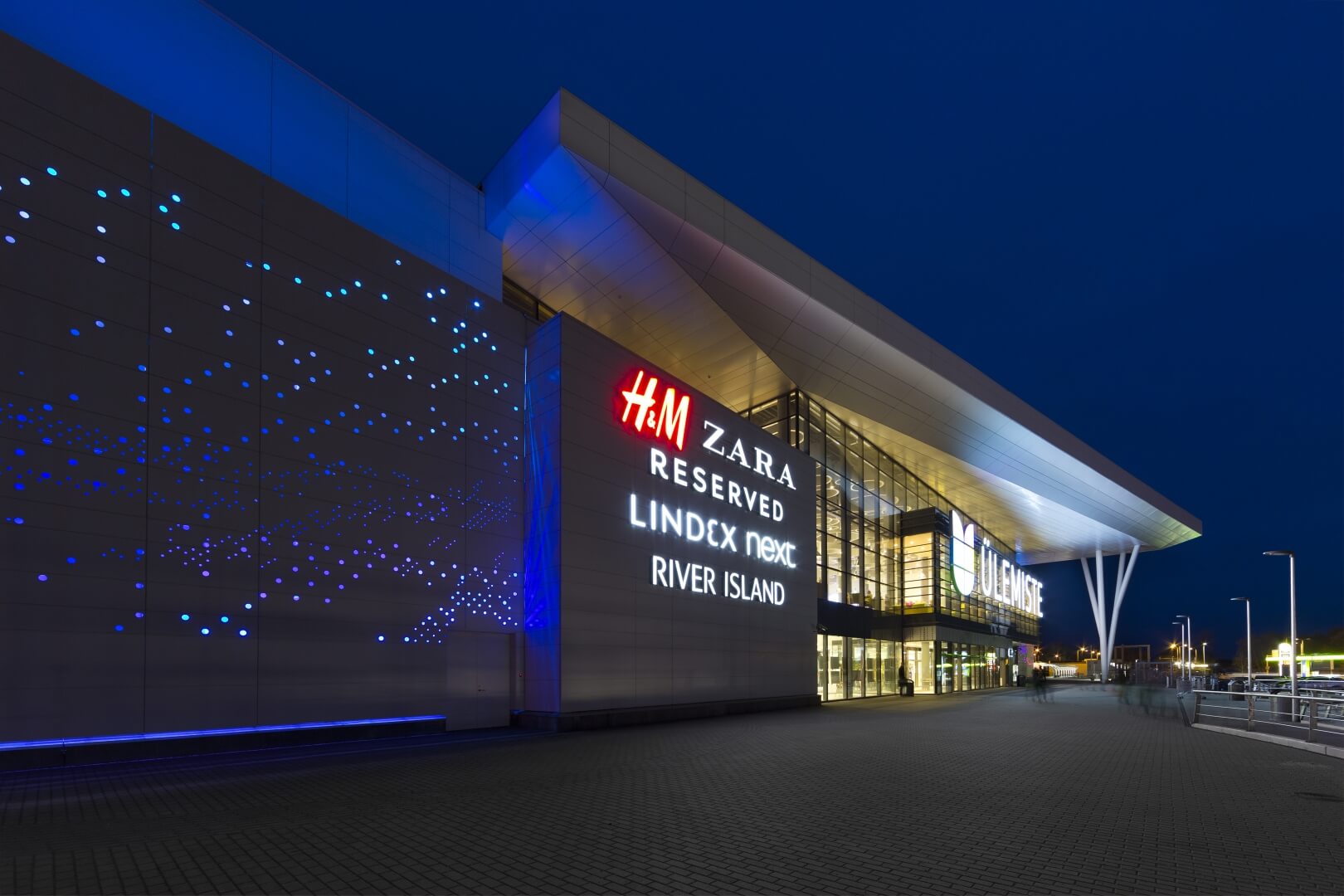
Ülemiste centre is by far the largest shopping centre in Tallinn and Estonia. The centre comprises of 125 000 sqm, which includes 220 shops and tens of restaurants and cafes. It is located close to Tallinn airport, the main bus station of Tallinn and Ülemiste Technopolis. Tram, bus and train routes connect the mall to the city centre. Long story short – Ülemiste Centre is an extremely busy and international place in need of a specialized shopping mall wayfinding solution.
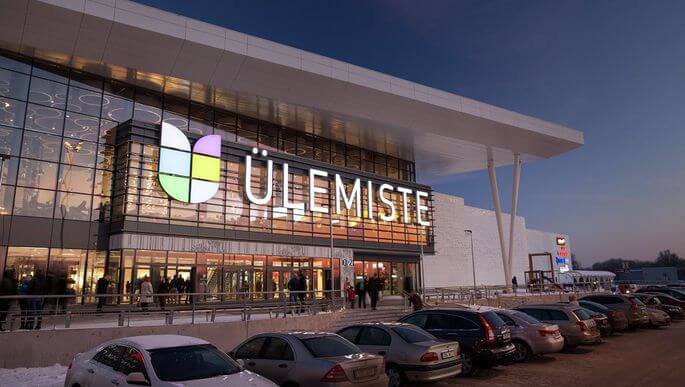
In order to make the mall accessible to all we implemented the dual approach of a mobile application combined with kiosks. The kiosks are located at convenient locations throughout the centre and include a building directory. There people can see the layout of the floors, search for specific shops or restaurants and get visual directions to them.
What we are especially proud of is the mobile application. The app works in the three most popular languages in Estonia – Estonian, Russian and English. Similarly to the kiosk, you can see the floor plans of the centre and search for specific shops and restaurants. The visitor’s location is pinpointed through iBeacons, which are Bluetooth low energy devices that can locate nearby electronic devices. Besides the path finding module, we included many other features to meet Ülemiste Centre’s needs. The app informs the user of ongoing sales in the mall and other campaigns. The app also allows the centre to send out notifications (push notifications) to inform the visitors about special offers, coupons or even emergencies. This sort of direct communication line to the customer can prove to be invaluable in shopping mall wayfinding. Another feature is the integration of gift cards into the app.
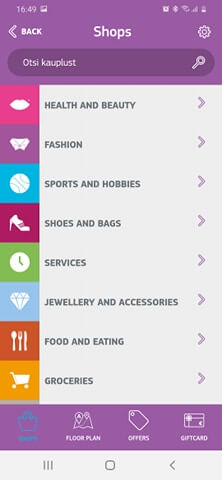
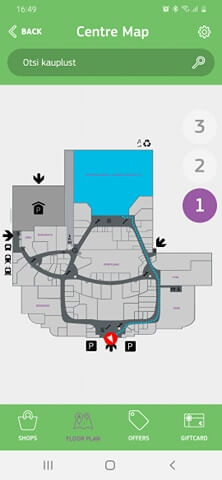
These were just some feature’s that the Ülemiste Centre chose to include in their solutions. 3D Wayfinder applications are highly adaptable to the customer’s needs and open to suggestions.